English
 Chinese
 Vietnam
 Español
 Pусский
 Français
 العربية

You’re three hours into a production run, everything’s humming, and then—silence. The conveyor stops, the touchscreen flashes an error you’ve never seen, and your operator is already reaching for the phone. Downtime isn’t just annoying; it’s expensive. But here’s the thing: most stoppages aren’t mysterious failures. They follow patterns. In this article, we’ll walk through the real reasons packing machinery grinds to a halt—not the vague “something broke” stories, but the specific, preventable issues hiding inside the hopper, the auger drive, the sealing system, and the sensors. Once you know what to look for, you’ll spend less time waiting for a technician and more time actually packing.
What happens when powder refuses to fall
Let’s start at the very top: the hopper. Powders are not liquids. They don’t always flow smoothly. Some are hygroscopic and clump. Others are fine and aerated, bridging across the hopper outlet like a tiny concrete arch. When that happens, the auger spins in an empty cavity, and the machine keeps running but nothing goes into the bag. Eventually, a “no fill” sensor triggers a stop.
You might think the solution is just a bigger agitator. But aggressive stirring can compact some powders even more. The real fix lies in hopper geometry and surface finish. A steep cone angle—60 degrees or more—helps gravity overcome friction. A mirror-polished interior (like 304 stainless steel with a #4 finish) reduces adhesion. Some designs add a low-speed agitator that gently breaks bridges without hammering the material.
Beyond geometry, consider how the powder gets into the hopper in the first place. If your upstream process drops material from a height, it can deaerate and pack tight before it ever settles. A simple inclined conveyor or gentle auger feed can preserve the powder’s natural flowability.
Why your fill weight drifts before a hard stop
One of the most frustrating patterns is gradual weight drift that suddenly becomes a total shutdown. You see the checkweigher creeping up or down, you adjust the fill parameter, and then—error. The servo drive reports a torque fault.
What’s actually happening? As the auger and tube wear or as powder moisture changes, the resistance to rotation changes. A good servo system monitors torque continuously. If it rises above a safe threshold (say, when powder packs too hard or a foreign object enters), the controller stops to prevent damage. That’s a smart protection feature, not a defect.
But you can avoid reaching that point. Keep an eye on your auger’s torque trend. If it’s climbing week over week, you likely have powder buildup inside the tube or a worn auger that’s rubbing. Schedule a cleaning or replacement before the machine decides for you.
Sealing system surprises that stop the line
Now let’s go downstream to where the bag actually closes. Heat sealing seems simple: apply heat and pressure, wait a moment, release. But in practice, sealing is the #1 source of intermittent stoppages on many packing lines.
Here’s a typical scenario. The machine runs fine for an hour, then suddenly rejects every third bag with a “seal incomplete” error. You check the temperature display—it’s steady. You check the pressure—normal. What gives?
The culprit is often heat creep. Sealing jaws get hotter over time, especially if cooling channels are undersized or if your cycle rate is at the machine’s limit. The thermostat reads the average temperature, but the jaw surface can overshoot locally. That overheated Teflon cover starts sticking to the film, the bag tears instead of sealing, and the sensor stops the line.
Or it could be the opposite: a cold jaw at startup. Many operators rush to resume production after a break without letting the sealer preheat fully. The first few bags look sealed but separate when dropped into the tote. Then you get a “seal timeout” error.
| Symptom | Likely Cause | First Thing to Check |
|---|---|---|
| Intermittent “no bag” errors | Dust on photoeye | Wipe lens with dry cloth |
| Registration drift over time | Loose bracket or vibration | Tighten sensor mount |
| Scale weight fluctuates wildly | Static electricity or moisture | Check grounding and desiccant |
| Jaw position fault | Debris on cam or encoder | Blow out with compressed air |
| Seal incomplete after warm-up | Heat creep or dirty jaws | Clean jaws, verify temperature |
What sensor failures actually look like
You might think a sensor “fails” when it stops sending a signal. But that’s rare. More often, a sensor gives false or intermittent readings because of environmental factors. Photoelectric eyes for bag registration get covered in dust. Proximity switches for jaw position get knocked out of alignment. Load cells for fill weighing drift from temperature changes.
Let’s take a concrete example. Your bag-making film has a printed registration mark. The sensor looks for that mark to cut each bag at the right length. If the sensor lens is even partially obscured by powder, it might miss the mark. The machine then “guesses” the cut position based on encoder counts. After a few bags, the error accumulates, and the cutter lands in the middle of a printed logo. The machine stops with a registration error.
The fix is almost never replacing the sensor. It’s cleaning it. And designing a machine where sensors are accessible—not buried behind guards—makes a real difference in daily uptime.
Operator-induced stops (and how to design them out)
Let’s be honest: not every stop is the machine’s fault. Sometimes the operator selects the wrong recipe, enters a bag length that doesn’t match the film, or forgets to reset the counter after a jam. But blaming people doesn’t solve anything. Good packing machinery minimizes these errors by design.
Think about recipe selection. On older units, you might scroll through a list of 50 unlabeled presets. On a well-designed touchscreen, each recipe has a clear name (e.g., “Whey_500g_Foil”) and a photo of the finished bag. Some systems even use barcode scanners: scan the film roll, and the machine loads the correct parameters automatically. That’s not science fiction—it’s available now.
Another operator trap is unclear fault messages. “Error 47” means nothing. “Seal jaw temp too low—wait 60 seconds” tells you exactly what to do. When you’re evaluating a filler, spend ten minutes pretending to be a new operator. What happens when you press the wrong button? Does the machine help you recover, or does it lock up and require a full reboot?
What converters ask before their first automatic filler
Q: How do I know if a filler is truly easy to clean without trying it first?
A: Look for a hopper that lifts and rotates. On the Changsinter HXL-F, the filling hopper can be raised as a complete unit and turned 180 degrees. Every interior surface becomes accessible at waist height. If the manufacturer can’t show you that feature in a video or drawing, expect difficult changeovers.
Q: What output can I expect from a servo-driven powder filler?
A: That depends on bag size and powder flow. The HXL-F typically runs 30–60 bags per minute for 500g–2kg ranges. More important than peak speed is consistency: servo control holds fill accuracy within ±0.5–1% over a full shift.
Q: Can the same machine handle different bag seal types?
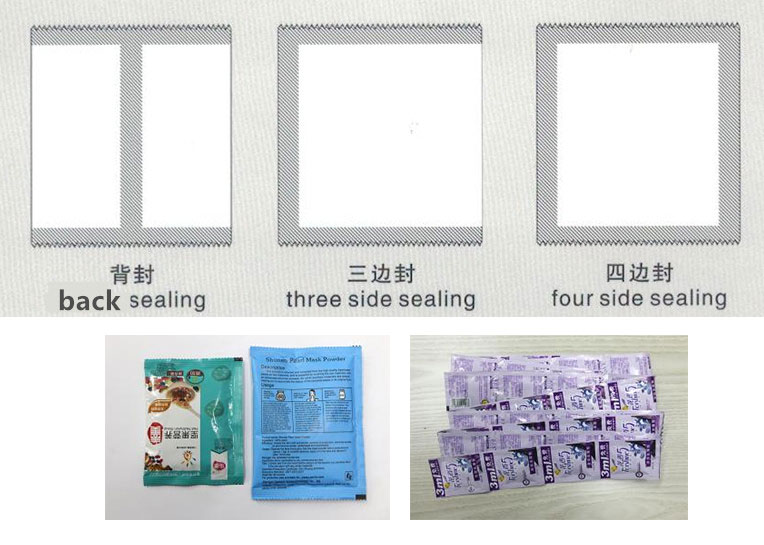
A: Yes, with change parts. The HXL-F supports back-seal, three-side-seal, and four-side-seal bag formats. Switching between them takes about 15–20 minutes with tool-less changeovers. Confirm with your supplier which formats are standard and which require extra kits.
How Changsinter addresses these hidden stops
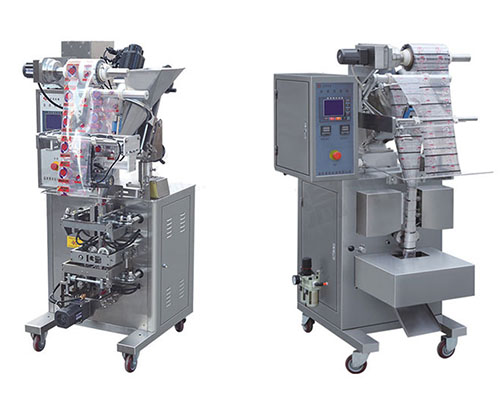
Now let’s connect this to a real product. Changsinter designed the HXL-F Powder Packing Machine with these exact failure modes in mind. The hopper uses a steep, mirror-polished 304 stainless cone with a gentle agitator to prevent bridging. The auger is servo-driven, and the controller monitors torque continuously—if something goes wrong, it tells you why in plain English on the full-color touchscreen.
The sealing system uses independent PID temperature control for upper and lower jaws, plus active cooling to prevent heat creep. Sensors are positioned for easy cleaning without tools. And the recipe management includes photo references and password-protected editing to reduce operator errors.
You still have to clean the jaws. You still have to check the sensor lenses. No machine is magic. But the HXL-F removes the unnecessary friction that turns a simple issue into a line stop. That’s the difference between a filler that fights you and one that works with you.
Before you call for service next time, run through this quick checklist. You’ll solve 80% of issues in under ten minutes.
-
Hopper – Is there a visible bridge or cavity? Tap gently or use agitator for a second.
-
Auger tube – Listen for scraping sounds. That indicates buildup or wear.
-
Seal jaws – Are they clean and fully heated? Run a test bag and pull the seal apart by hand.
-
Photoeye – Shine a light; is the lens hazy? Wipe it.
-
Film alignment – Is the film tracking straight or creeping to one side?
-
Compressed air – Is your plant air pressure within spec? Low pressure kills pneumatic grippers.
-
Grounding – Do you have static shocks near the filler? Static disrupts sensors and film feeding.
Get these basics right, and your line will run longer, smoother, and with fewer surprises.
Tired of unexplained stops on your packaging line? Contact Changsinter for a consultation or to request a quote on the HXL-F Powder Packing Machine for your facility.