English
 Chinese
 Vietnam
 Español
 Pусский
 Français
 العربية

You’re running a non-woven fabric converting operation, and the printing step determines whether your products command premium pricing or end up in the discount bin. Traditional screen printing on fabric involves multiple handling steps, alignment headaches, and labor-intensive processes.
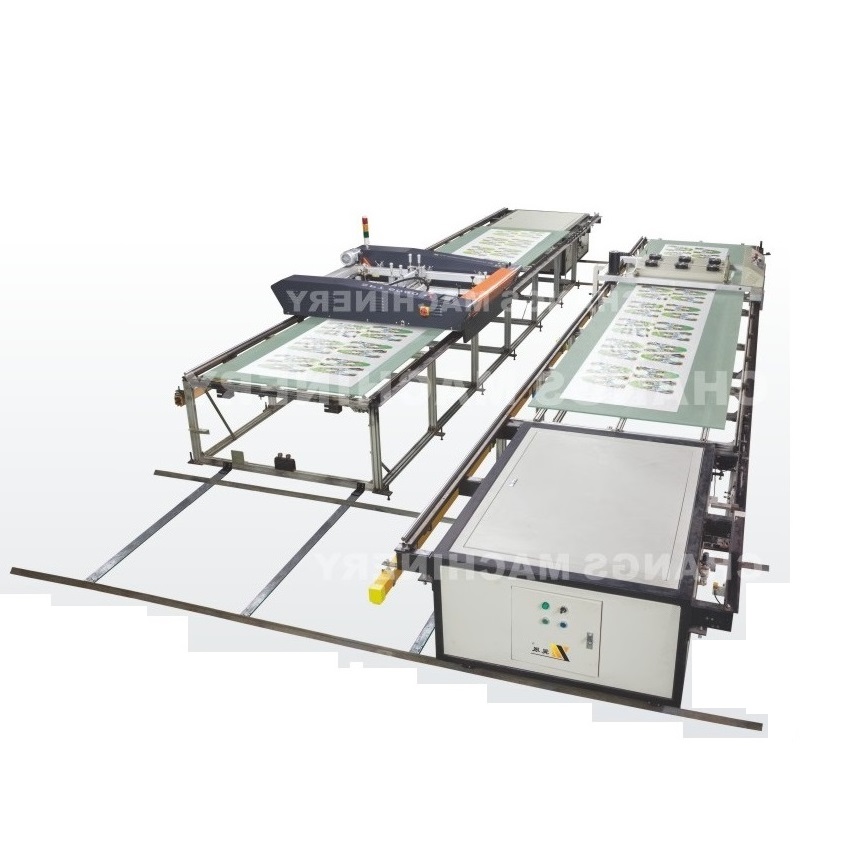
A Printing machinery solution like the SFB-NWF-12010 automatic roll-to-roll non-woven fabric screen printing machine changes that equation entirely. It feeds from a roll, prints continuously, and delivers finished printed material—all in one automated pass. This guide covers the real value of roll-to-roll screen printing for non-woven fabric production, the key specifications that drive performance, and how automation transforms a labor-intensive process into a competitive advantage.
The Hidden Costs of Traditional Screen Printing
Before you can appreciate what automation delivers, you need to understand what it replaces.
Labor That Doesn’t Stop
A manual or semi-automatic screen printing line requires constant operator attention—feeding sheets, adjusting alignment, applying ink, and collecting printed material. Each step adds labor cost and introduces the potential for human error. With a fully automatic roll-to-roll system, one operator manages the entire production line from feeding to collection.
Waste That Doesn’t Show Up on the Balance Sheet
Misaligned sheets, inconsistent ink application, and handling damage all create waste that eats into margins. Roll-to-roll printing eliminates the handling steps that cause these issues. The material moves continuously through the machine, maintaining alignment from the first meter to the last. The result: less waste and higher yield from every roll.
The Downtime Trap
Changeovers between jobs on traditional equipment can take hours—time that could be spent producing. The SFB-NWF-12010 features fast changeover capabilities, with printing sleeves automatically loaded and print pressure automatically adjusted. For converters running multiple jobs, this means more production time and shorter lead times.
How Automation Improves Print Quality
Consistency is the hallmark of quality printing. Automation delivers it.
Microprocessor-Controlled Printing
The SFB-NWF-12010 uses microprocessor control to manage all functional movements. Ink squeegeeing and flooding are automated, ensuring consistent application across the full print width. The result is uniform print quality—no thin spots, no heavy spots, no variations between prints.
Balanced Pressure for Even Coverage
Screen printing relies on consistent pressure across the entire printing area. The machine’s design ensures balanced pressure that delivers even ink transfer. For designs requiring full coverage, the SFB-NWF-12010 achieves ink coverage up to 100% of the surface area, delivering vibrant, opaque prints that stand out.
High Ink Thickness for Durability
Non-woven fabrics are used in applications where durability matters—shopping bags, packaging, and promotional textiles. Screen printing on the SFB-NWF-12010 achieves high ink thickness that resists wear and maintains its appearance through repeated use. For branding applications, this durability translates into longer-lasting promotional impact.
Specifications That Tell the Real Story
The numbers determine what the machine can actually deliver. Here’s what matters.
Print Area That Maximizes Material Use
The SFB-NWF-12010 supports a maximum printing size of 1200×1100mm with non-woven fabric roll width up to 1250mm. This means you can print the full width of standard non-woven rolls, maximizing material utilization and minimizing edge waste.
Material Range That Expands Your Business
The machine handles non-woven fabric from 45g/㎡ to 100g/㎡, covering everything from lightweight promotional bags to heavier packaging and industrial applications. The SFB-NWF-12010 also supports printing on PET, PP, PVC, stickers, and paper, expanding your addressable market beyond non-wovens.
Ink Coverage That Fits Your Needs
The machine supports ink coverage from small logos to full coverage prints at 100%. Whether you’re printing a simple one-color brand mark or a complex multi-color design, the SFB-NWF-12010 delivers consistent results. The 5-digit auto counter tracks production volume, enabling accurate inventory management and production planning.
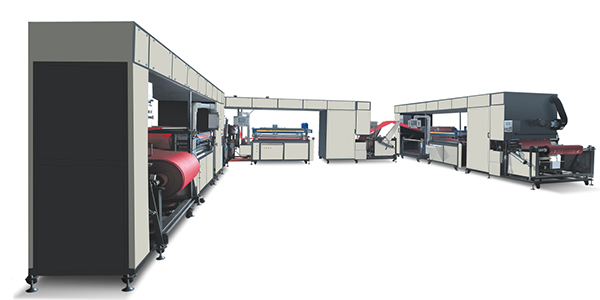
From Blank Roll to Finished Product — The Continuous Workflow
The value of roll-to-roll printing is in the workflow. One machine does what used to require multiple steps.
Feed, Print, Dry, Collect — In One Pass
The material moves from the unwind roll through the printing station, then through the drying system, and finally to the rewind or collection section. This continuous flow eliminates the handling that creates alignment issues and slows down sheet-fed operations. For non-woven fabric rolls with a maximum diameter of 1.25m, the machine maintains consistent production without the stops and starts that waste time.
Saving Labor, Saving Time
With automatic feeding, printing, drying, and collecting, the machine reduces the manual intervention required in traditional screen printing. One operator can manage the entire line. The latest technological innovations, such as job memory and open ink systems, significantly reduce plate changeover times—so you spend less time setting up and more time producing.
Quality That Builds Trust
When every roll meets the same quality standard, your customers trust your output. Consistent print quality reduces returns, builds repeat business, and strengthens your position in the non-woven fabric market.
The Economics of Automated Screen Printing
The decision to invest in automated printing machinery comes down to numbers. Here’s how they add up.
Reduced Labor Costs
With one operator running the entire line instead of multiple operators handling separate steps, labor costs drop significantly. For high-volume production, the savings pay for the machine over time.
Lower Material Waste
Automated alignment and consistent tension reduce waste from misprints, misalignment, and handling damage. Lower waste means more saleable product from every roll of non-woven fabric.
Higher Throughput in Less Time
Continuous production at steady speeds delivers higher throughput per shift. Faster changeovers mean more jobs per day. The combination of speed and uptime translates directly into higher revenue potential.
| Factor | Traditional Screen Printing | Roll-to-Roll Automated System |
|---|---|---|
| Operator requirement | Multiple operators | One operator |
| Changeover time | Hours | Minutes |
| Material handling | Multiple steps | Continuous |
| Print consistency | Variable | Uniform |
| Waste percentage | Higher | Lower |
| Throughput | Limited by manual steps | Continuous high speed |
Straight Answers on Non-Woven Screen Printing
What is the maximum roll weight the SFB-NWF-12010 can handle?
The machine handles non-woven fabric rolls with a maximum diameter of 1.25m. The actual roll weight depends on the material density and width. The machine is designed for continuous operation with large rolls, minimizing the frequency of roll changes.
Can the machine print on materials other than non-woven fabric?
Yes. The SFB-NWF-12010 is suitable for screen printing on non-deforming materials in roll form, including PET, PP, PVC, stickers, and paper. This versatility allows converters to run different substrates on the same equipment, maximizing utilization and reducing capital expenditure.
What ink coverage is possible on non-woven fabric?
The machine supports ink coverage from small logos up to 100% of the surface area. For full-coverage designs, the screen printing process delivers high ink thickness for vibrant, durable prints. The actual coverage depends on the design and the screen specifications.
What is the typical production speed for non-woven fabric printing?
The SFB-NWF-12010 is designed for high-speed continuous production. The actual speed depends on the material thickness, ink type, and drying requirements. For converters running high-volume orders, the automated feeding, printing, and collecting process delivers consistent output with minimal operator intervention.
Talk to Our Printing Machinery Specialist
An automatic roll-to-roll screen printing machine is more than equipment—it’s a shift from labor-intensive production to automated efficiency. Whether you‘re producing shopping bags, packaging, or promotional textiles, the right machine turns material rolls into finished printed product with minimal waste and consistent quality.
Changs International has been committed to providing market-leading machinery for printing technology in the field of packaging printing. The SFB-NWF-12010 automatic roll-to-roll non-woven fabric screen printing machine delivers high-speed, automated printing with microprocessor control, automatic ink squeegeeing and flooding, and fast changeover capabilities. It’s built for real production environments where speed, quality, and reliability matter.
Contact Changs International‘s team to discuss your material types, print volume, and design requirements—they can recommend the right configuration for your specific needs.