English
 Chinese
 Vietnam
 Español
 Pусский
 Français
 العربية

A label converter had a recurring problem. A six‑color craft beer label job finished at 10:00 AM. The next job was a simple one‑color shipping label. On their old press, the operator spent 50 minutes washing out the six ink stations, cleaning the anilox rollers, and resetting the registration. By the time the one‑color job started, the morning shift was nearly over. The printing machinery that should have made them profitable was losing money on every changeover.
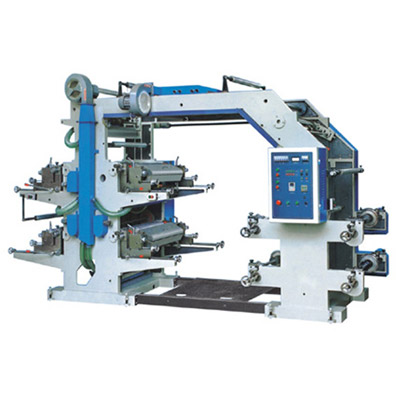
The YT Narrow Web Flexographic Printers from Changs International are designed to answer that question with a different approach: open ink wells that lift out in seconds, quick‑release anilox sleeves that slide off without tools, and servo drives that remember registration settings. This press handles web widths of 250‑450mm, runs at 150m/min, and holds ±0.1mm registration. This guide explains why the combination of open ink wells, quick‑sleeve anilox, and servo‑driven register makes the YT series the choice for converters who change jobs five times a shift.
The open ink well – why you can skip the 30‑minute flush between colors
A chambered doctor blade system is sealed. To change ink, you must drain the chamber, pump solvent through it, replace the seals, and refill. That is a 15‑minute job per station. On a six‑color press, that is 90 minutes of downtime for a full wash‑up – before you even start mounting plates.
The YT series uses open ink wells with a two‑roll metering system. The ink sits in a pan beneath the anilox and fountain rolls. To change color, the operator lifts the pan out by hand, pours the old ink into a waste bucket, wipes the anilox with a cloth, and pours in the new ink. The process takes 90 seconds per station. For a six‑color press, the full wash‑up is under 10 minutes, and the press is ready for the next job.
| Feature | Chambered Blade | YT Open Ink Well |
|---|---|---|
| Wash‑up time per color | 10‑15 minutes | 1.5 minutes |
| Tools required | Wrenches, seal kits | None |
| Waste ink volume | 2‑3 liters per wash | 0.5 liter |
| Short‑run profit threshold | >1000 meters | >200 meters |
The open ink well also makes it feasible to run very short jobs. A 300‑meter label run that takes 10 minutes to wash up before and after is not worth the effort. On the YT press, the same job with 90‑second wash‑up becomes profitable.
Quick‑sleeve anilox – why you do not need a dedicated anilox roll for every line count
A conventional anilox roll is a heavy steel cylinder with bearings on both ends. Changing it requires removing the bearing blocks, lifting the roll out with a hoist, and installing another roll. The job takes 20‑30 minutes per station. Many converters leave the same anilox in place for months, compromising quality on jobs that need a different line count.
The YT series uses quick‑sleeve anilox technology. The anilox is a lightweight composite sleeve that slides onto a fixed air mandrel. The operator releases air pressure, pulls the old sleeve off, slides a new sleeve onto the mandrel, and reapplies air pressure. The change takes under 90 seconds per station. A converter can run a 120 L/cm sleeve for fine screen work in the morning, swap to a 60 L/cm sleeve for solid coverage in the afternoon, and swap back the next day. No hoist, no tools, no bearing alignment.
How the sleeve system prevents damage from doctor blade wear
The ceramic coating on anilox sleeves wears over time. When the coating wears through, the sleeve must be replaced. A damaged steel anilox roll is expensive to recondition (often 60‑80% of a new roll). A worn sleeve is simply discarded and replaced with a new sleeve at about 30% of the cost of a roll. For a converter running abrasive white inks, the ability to discard a worn sleeve instead of reconditioning a roll saves thousands per year.
Servo drives that remember registration – why the second job starts where the first one left off
On a mechanical gear‑driven press, registration is set by adjusting each station’s gear phase. When you change repeat length, you must swap gears. When you change back to a previous repeat length, you must find the correct gear again. The operator relies on a logbook and trial‑and‑error, wasting substrate and time.
The YT series uses servo motors for each printing station. The registration offset for each color is stored in the job recipe. When the operator recalls a previous job, the servos automatically position each plate cylinder to the stored angular offset. The first sheet out of the press is already in register, saving 20‑30 meters of substrate per changeover – and the 15 minutes of manual tweaking that usually follows.
Web widths from 250mm to 450mm – why narrow web is the short‑run sweet spot
The YT series is available in four web widths: 250mm, 330mm, 400mm, and 450mm. The 250mm press is ideal for pharmaceutical labels, cosmetic decals, and small SKU tags. The 450mm press can print two across labels for food packaging, wine bottles, and industrial chemical drums.
Narrow web reduces substrate waste during changeover. A 450mm press has edge trim of about 15mm per side, representing 6‑7% of the web. On a 200‑meter short run, that is 12‑14 meters of waste. A 1000mm wide press with the same edge trim wastes only 3% of the web, but the wider press has slower changeover and higher running costs. The narrow web YT series is optimized for converters who run many short jobs daily.
The two‑roll metering system – when you do not need a chambered doctor blade
Chambered doctor blades are required for solvent‑based inks, high speeds (>250m/min), and long runs (>10,000m). For water‑based and UV inks at 150m/min on short runs, the chambered blade adds complexity without benefit. The YT series uses a two‑roll metering system: a rubber fountain roll transfers ink from the open well to the anilox, and the anilox meters the ink to the plate.
The two‑roll system is self‑adjusting. If the ink viscosity changes slightly, the fountain roll picks up more or less ink automatically. An operator can pour ink directly from a bucket into the well and start printing. No viscosity controllers, no pumps, no complex seal maintenance.
When you should upgrade to a chambered blade
A converter who runs the same 10,000‑meter label job every week may find that the open ink well requires refilling every two hours. Adding an automatic viscosity controller and a pumped recirculation system (available as an option on the YT series) can extend the run length. For solvent‑based inks, a chambered blade is necessary to prevent evaporation. For UV inks, the open well works fine because UV inks do not evaporate significantly.
Substrate flexibility – self‑adhesive paper, film, and tag stock
The YT Narrow Web Flexographic Printers are built for the materials that short‑run label converters use daily:
-
Self‑adhesive paper (80‑160 gsm, silicone release liner)
-
Self‑adhesive film (BOPP, PET, PE, PVC, 25‑100 micron)
-
Tag board (150‑300 gsm for hang tags, luggage tags)
-
Thermal paper (for POS receipts)
-
Light paper (40‑80 gsm for wraparound labels)
The press includes a web cleaner (tacky roller) to remove dust from self‑adhesive liner. An optional corona treater raises surface energy for film adhesion. The drying system uses hot air with adjustable nozzles; at 150m/min, water‑based inks dry completely on non‑porous film when the dryer temperature is set correctly.
Three mistakes a narrow web converter makes with quick‑changeover presses
Mistake one: Not staging the next job while the current one runs
The YT series includes a turret rewinder with roll unloading assist. While the press prints, the operator can prepare the next core, splice new material to the tail of the current roll, and set the knife positions for the next slit width. When the current roll finishes, the press automatically switches. Staging the next job cuts changeover downtime from 15 minutes to under 2 minutes.
Mistake two: Using the same anilox sleeve for everything
A 120 L/cm anilox works fine for fine screens, but it will under‑deliver ink for a solid coverage job, resulting in a washed‑out print. The operator should keep a set of three sleeves: low (60‑70 L/cm) for solids, medium (80‑100 L/cm) for general work, and high (120‑140 L/cm) for fine screens. The quick‑sleeve system makes swapping between them trivial, so there is no excuse to run the wrong anilox.
Mistake three: Skipping the regular cleaning of the fountain roll
The rubber fountain roll picks up ink from the well and transfers it to the anilox. After a long run of opaque white ink, a film of dried ink builds up on the fountain roll, reducing transfer efficiency. The operator should clean the fountain roll with a solvent wipe every 8 hours of runtime. A spare fountain roll can be swapped in during the cleaning cycle to keep the press running.
[Image: Quick‑sleeve anilox system on the YT series, showing the lightweight composite sleeve being slid onto the air mandrel and the fountain roll adjacent to it]
Where the YT Narrow Web Flexographic Printer fits into Changs’ product line
Changs International has manufactured narrow web flexographic presses for the label industry since 2004. The YT series is their quick‑changeover platform, designed for converters who run multiple short jobs per shift. The product family includes the YH series (chambered blade, higher speed) for long‑run label converters, and the YC series (central impression) for film and tissue printers.
The YT series is CE certified, built with 40mm side frames, Delta inverters, SMC pneumatics, and a Siemens‑compatible HMI. The press is supplied with a set of anilox sleeves (three line counts), a spare fountain roll set, and a 12‑month warranty. Changs provides on‑site installation and training through virtual commissioning and a remote support system.
For a printing machinery platform that changes from six colors to one color in 90 seconds per station, the YT Narrow Web Flexographic Printers deliver the open ink wells, quick‑sleeve anilox, and servo registration that make short runs profitable.
【Request a quote from Changs International】
Contact Changs with your maximum label width, typical job run length, and number of color changes per shift for a YT series configuration.